°
°
° ° ° ° ° ° ° ° ° ° ° ° ° ° ° ° ° ° °
° ° ° ° ° ° ° ° ° ° ° ° ° ° ° ° ° ° °
° ° ° ° ° ° ° ° ° ° ° ° ° ° ° ° ° ° °
° ° ° ° ° ° ° ° ° ° ° ° ° ° ° ° ° ° °
project.baumberg
Die Monade (gr. monás, Genetiv : monádos,
woraus lat. monas, Genetiv monadis
»die Einzelheit, die Einheit«) ist ein
philosophischer Begriff, den Leibniz in die
Philosophie eingeführt hat. Er definiert
ihn wie folgt: »Die Monade... ist nichts
anderes als eine einfache Substanz, die
in den zusammengesetzten enthalten
ist. Einfach ohne Teile... Wo nun aber
keine Teile vorhanden sind, gibt es
auch keine Ausdehnung, keine Gestalt
und keine mögliche Teilbarkeit.
Diese Monaden sind die Atome der Natur und
mit einem Wort: die Elemente der Dinge«
(Leibniz, Monadologie,
1714, § 3).
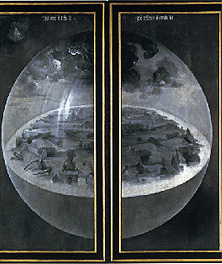
Hieronymus Bosch (1450 – 1516):
Die Erschaffung der Welt
In the writings of the philosopher Gottfried
Leibniz, monads are atomistic mental objects
which experience the world from a particular
point of view. Leibniz's theory does not posit
physical space; rather, physical objects are
constructs of the collective experiences of
monads. This way of putting it is misleading,
however; monads do not interact with each
other (are »windowless«), but rather are
imbued at creation with all their future
experiences in a system of pre-
established harmony. The arrangements
of the monads make up the faith and
structure of this world, which to
Leibniz was »the best of all
possible worlds«.
Hieronymus Bosch (1450 – 1516)
The creation of the world